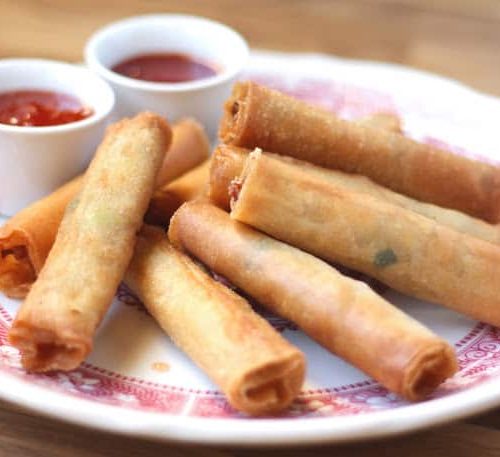
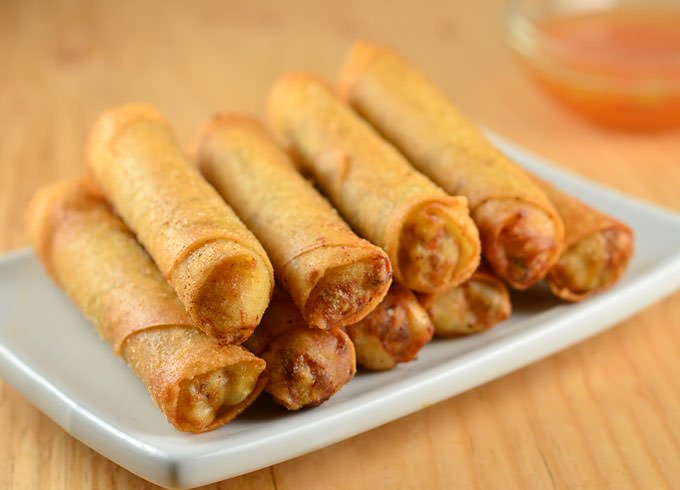
Lumpia is a spring roll commonly found in Indonesia and the Philippines. It is a savoury snack made of thin crepe pastry skin called “lumpia wrapper” enveloping a mixture of savoury fillings, consists of chopped vegetables (carrots, cabbages, green beans, bamboo shoots and leeks) or sometimes also minced meat (chicken, shrimp, pork or beef). It is often served as an appetizer or snack, and might be served deep fried or fresh (unfried). Lumpia is quite similar to fresh popiaor fried spring rolls popular in Southeast Asia.
The lumpia is derived from the Chinese spring roll. Similar in size and shape, this menu item is popular in Indonesian and Filipino cuisine. The origins date back centuries, as the Chinese originally sought to create a meal that incorporated all the fresh vegetables available in spring after a winter of consuming mostly preserved foods. It is believed that Chinese immigrants from the Fujian province brought this dish to Southeast Asia, and that it’s popularity spread from there.
There is no one universal version of the lumpia. Common ingredients include bamboo shoots, carrots, sprouts, shaved chicken, pork or prawns; however, there is also a popular banana-filled version that is on the sweeter side. These ingredients are sealed in a crepe-like rice or flour wrapper that is then coated with an egg wash and fried. A sweet and sour dipping sauce is served with this Filipino food classic for a savory yet sweet finish.
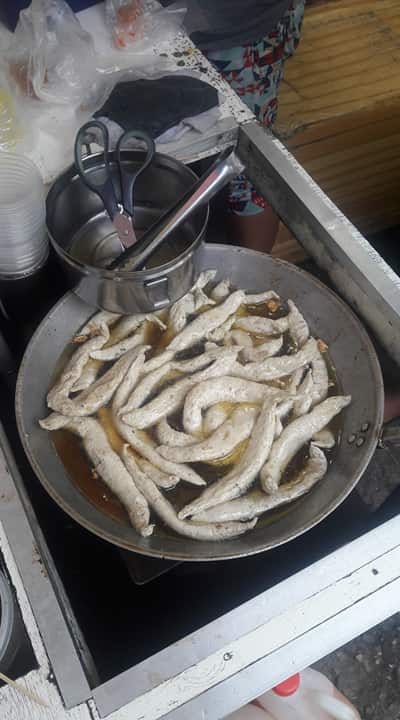
Tempura is known in Japan as a dish of fish, shellfish, or vegetable, fried in batter but here in the Philippines it is well known as a filipino snack.
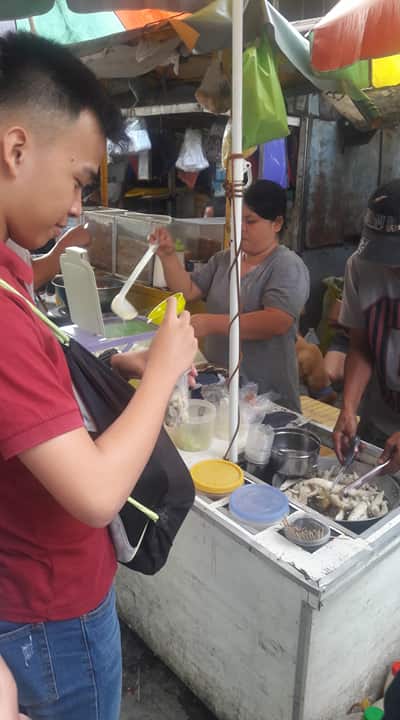
You can find a strolling tempura vendors with his bike and cart in most of the street and public area of any provinces of the Philippines. Vendors can cook tempura while you wait in just their stance or bikes and you can also choose your tempura pieces in their basket since there are some tempura which is small and big, sizes are different exactly but when it’s already been boiled, it will just sprout from it’s raw small size.
Like fish balls, tempura could also be in a bamboo stick skewer and sometimes in a small paper plate. Filipinos really loved to dip down tempura on a spicy sauce. Also, tempura vendors has also different flavor of sauce for you to choose, whether you like hot and spicy or sweet and sour, then your will just pour your stick of tempura to their bottle of sauce labeled with hot and spicy and sweet and sour flavors.
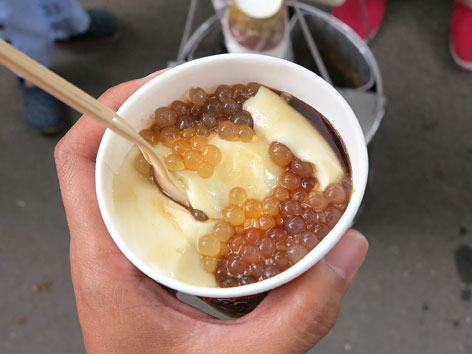
Taho is a filipino snack food made of fresh tofu, and sago pearl. Through early records, it is evident that taho traces its origin to the Chinese douha. it’s very similar to dishes served in Malaysia, Singapore, Vietnam, Hong Kong, and South Korea the tofu base tends to remain constant in most places, but the accompanying flavor can be spicy, savory, or sweet. No doubt, taho is a Chinese invention that traveled the region, taking on local ingredients like soy sauce, ginger, chili oil, peanuts, and mung beans for flavor
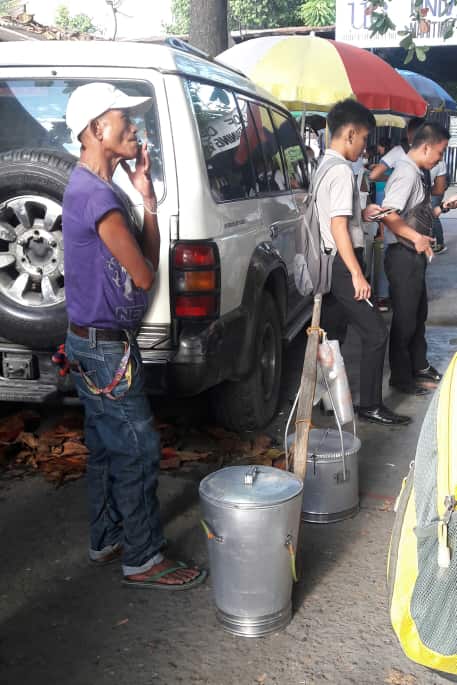
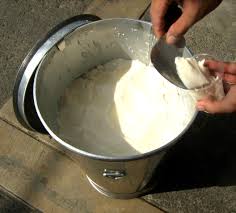
Taho vendors hawk their product using a yoke-and-bucket system that’s hundreds of years old. Two aluminum buckets are suspended from each end of a bamboo pole—one containing the soft tofu, the other containing the arnibal, sago, and other necessities, including plastic cups, spoons, and the day’s takings. Taho vendors balance their signature contraption on one shoulder and walk the streets calling “Tahhoooooo,” drawing out the second syllable for as long as the breath can handle.
Many Filipinos living outside the Philippines would definitely miss this one especially when they have not tried it for a long time as this was a part of everyone’s life since childhood.
Now for those who are craving for this one and you’re not in thhe Philippines, crave no more as you can do it at home all you have to do is look for an Asian store and look for a top grade tofu jelly, it is the same tofu used in Taho. And for those who are curious you should try this out you might like it.
Ingredients
Top grade tofu jelly
brown sugar
sago pearls
water
Instructions
Cook
tapioca pearls according to packet instructions but add sugar on it,
the amount of sugar will be similar to the amount of sago pearls (1 part
sugar to 1 part sago pearls)
Once cooked set it aside and let it cool.
In
a saucepan add water and brown sugar this time the ratio should be 1
part water to 3 parts brown sugar. Place in low heat until sugar
dissolves then bring heat to medium and let it boil, simmer for 5
minutes.
Place
tofu in heat proof mugs the place it on a steamer, cover mug with cling
wrap or small saucer to prevent water from coming in then steam for 15
minutes, you can also use microwave for 90 seconds each full mug but
steaming yields better result.
Remove mugs from steamer then top it with sugar syrup and sago pearls. Serve it while hot.
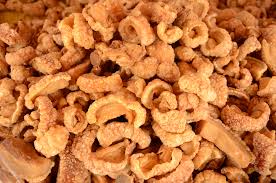
Cebu is home to a number of delicacies that have tickled the taste buds of every Cebuanos for generations. One of the most famous delicacies in the Cebu is in the City of Carcar, the chicharon or pork crackling. Yes, other places in the archipelago offer this stroke-inducing snack item, but the chicharon in Carcar is one delicacy no one could ever resist. Carcar City is bordered to the north by the town of San Fernando, to the west are the towns of Aloguinsan and Barili, to the east is the Cebu Strait, and to the south is the town of Sibonga
Chicharon of CarcarCarcar City Rotunda Circle
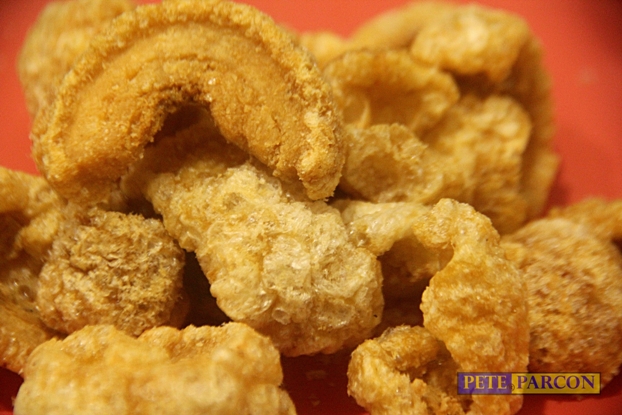
Chicharon is made of pork rind that is boiled in water with spices and salt before it is cooked in hot oil. The chicharon-making industry in Carcar supposedly started in the 1900s when a couple started selling the delicacy after they discovered the delectable taste offered by pork rind boiled in oil. It is tasty yet it is not healthy. ating this snack should still be controlled. This snack, as delicious as it is, is full of saturated fat and trans fat – which are known to be harmful to one’s health. Saturated fats are coming from animals, and this fat becomes solid in room temperature, and therefore, a big chance of increase in cholesterol will happen if they are in the body. On the other hand, trans fat, are unsaturated fat that is commonly found in preservatives. This type of fat causes the increase of bad cholesterol in the body, and the decrease of good cholesterol. Therefore, both type of fat, saturated and unsaturated raises the person’s risk in acquiring cardiovascular diseases. There are even studies which suggest that saturated fat has the potential to increase the risk of a person to develop type 2 diabetes. Furthermore, chicharon and pork rinds, just like other snacks, are also full of calories which, if not controlled, can lead to obesity.
Apart from the saturated and unsaturated fat that this snack contains, it also has massive sodium, or salt content. The sodium content of chicharon is reported to be more than three times compared to those typical potato chips, corn chips and other junk foods. Although not directly bad for diabetics, sodium helps stimulate thirst, thereby urging the person to drink water or any kind of beverage. Ultimately, sodium also accelerates the water retention in the body. Therefore, too much sodium can likewise lead in increase and weight, as well as heart diseases.
People usually think any body part procured from a pig is full of unhealthy fat. Chicharon is also deep-fried, and we associate anything fried as being fattening.
The Health Benefits
Protein
A small pack of chicharon (0.5 oz)
contains eight to nine grams of protein. That’s the same amount of
protein in 100 grams of nonfat Greek yogurt and more protein in a bag of
chips. Protein is essential to the body. It helps repair muscles and
can stimulate the production of body chemicals like enzymes and
hormones.
Zero Carbs
This is the main reason pork rinds
are often recommended as a snack in low-carb diets, because it’s full of
protein and doesn’t contain carbohydrates, unlike other on-the-go
snacks. There’s even debate about whether it’s good for diabetics or not
because it has little to no impact on blood sugar. While experts are
arguing about that, have a bag of chicharon.
Today, Carcar is the center of the chicharon industry in the island of Cebu. One distinctive feature of the chicharon from Carcar is the meat that comes with each piece. While you can buy chicharon without the meat, the best ones are the ones with meat on them. This variety of chicharon can be eaten either on its own with vinegar or it can be eaten with rice for a regular meal. It can also be used as an ingredient to a dish, like sautéing it with vegetables.
Tuslob buwa is a Cebuano term for an exotic street food sold in the barangay Pasil and Ermita. The literal meaning of tuslob buwa is “to dip into bubbles.” Tuslob buwa (which literally means “to dip into bubbles”), is a street food that works in tandem by dipping puso (or hanging rice) into the hot bubbling sauce made up of pig brain, pork liver or intestines (this may be optional), onions, oil, soy sauce or shrimp paste and other various seasonings.
Tuslob buwa: A bubble bath of brain pepper.ph
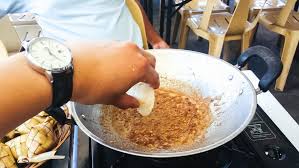
Some vendors have a heated work ready for use when they go out into the
streets. Once customers start to gather, they simply put in oil and some
of the mixture into the heated wok and wait for bubbles or the “buwa”
to form. While some vendors serve the heated mixture on a plate for
their customers, some customers opt to dip their puso or hanging rang
straight into the wok with the mixture. The “buwa” in the wok is
typically served for free and customers only have to pay for the puso,
which costs P 3 each. But if it is served on a plate, it typically costs
P10.
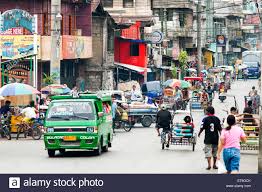
Tuslob buwa has gradually increased in popularity up to a point that some business-minded individuals have set up their own tuslob buwa businesses. Tuslob-buwa is Brgy. Pasil’s signature food but is also found in other parts of Cebu City



 Neil's Blog